

What is Intersectionality?
Intersectionality is a framework for understanding how multiple aspects of a person's identity—such as race, gender, class, sexuality, and ability—intersect to create unique experiences of privilege or oppression. It was coined by Kimberlé Crenshaw in 1989, who highlighted how legal frameworks often overlooked the experiences of Black women, who faced both racial and gender discrimination.
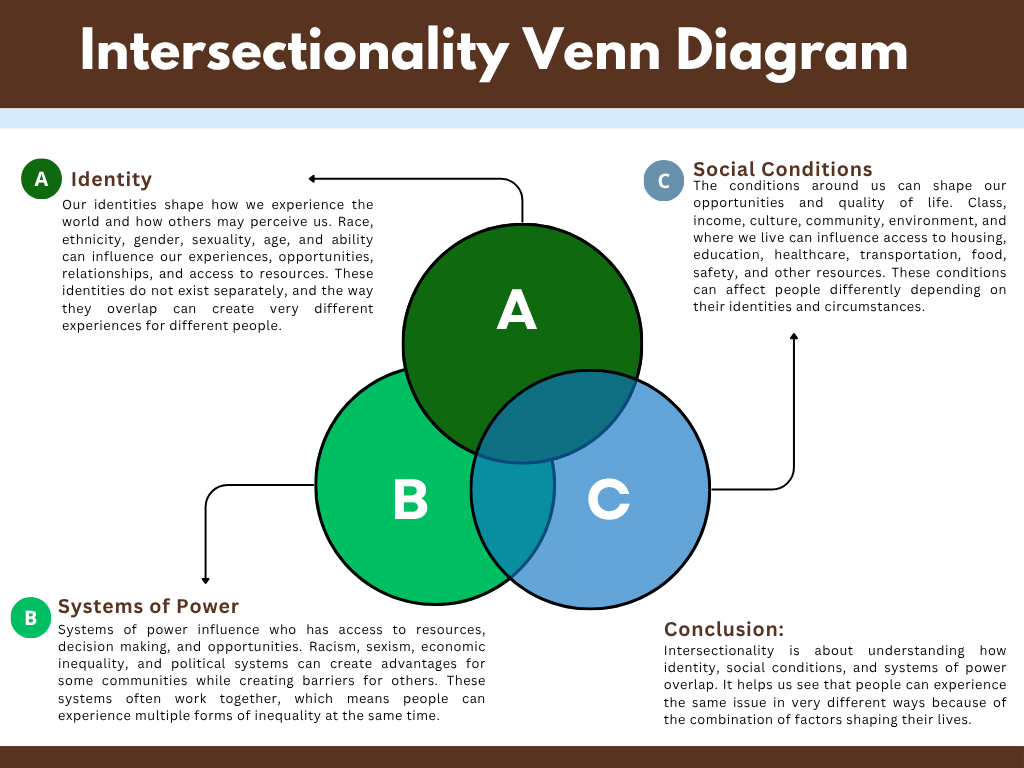
Women and the Intersections of Identity
Intersectionality helps us understand that women do not all experience the world in the same way. Gender can intersect with race, class, age, disability, culture, and other identities to shape a person's experiences, opportunities, and challenges. Understanding these intersections helps us recognize the different ways women experience inequality and how their experiences are connected.
Black Women
Black women have historically faced both racial and gender discrimination. Their lives and opportunities have frequently been affected by the combined forces of racism, sexism, and persistent economic inequality. From the long struggle against slavery and the brutality of segregation to leadership in movements for civil rights, labor protections, and broader social justice, Black women have repeatedly taken crucial roles in organizing, advocating, and building community power.
Indigenous Women
Indigenous women have experienced the far-reaching effects of colonization, land dispossession, cultural suppression, and persistent gender-based inequality. Their lived experiences are closely tied to efforts to protect Indigenous territories, sustain cultural practices, support families, and assert collective sovereignty. Throughout history and today, Indigenous women have served as vital leaders in movements to safeguard their communities, defend the environment, and preserve and pass on cultural traditions.
Working Class Women
Class can strongly influence how women experience inequality. Working-class women may confront persistent challenges related to low wages, unstable or inadequate housing, limited and costly childcare, gaps in healthcare access, unsafe or exploitative workplace conditions, and constrained access to essential resources and services. When class intersects with race and gender, these problems often compound and become even more complex and entrenched. Understanding these interconnected dynamics helps explain why economic justice and gender justice are so closely linked and must be addressed together.
Latina Women
Latina women often experience the intersection of gender, race, ethnicity, immigration status, and socioeconomic class. These overlapping identities can profoundly shape their experiences with education, employment, healthcare access, family and caregiving responsibilities, and political participation. Latina women have also played important and sustained roles in labor organizing, community advocacy, and broader movements for social, economic, and racial justice.